
Creeping Buttercup

- Creeping Buttercup Control
- Creeping Buttercup Ground Cover
- Creeping Buttercup King County
- Creeping Buttercup Usda
- Creeping Buttercup (ranunculus Repens)
Ranunculus repens, the creeping buttercup, is a flowering plant in the buttercup family Ranunculaceae, native to Europe, Asia and northwestern Africa. It is also called creeping crowfoot and (along with restharrow) sitfast. Stems to 40 cm with hirsute to nearly glabrous foliage, prostrate and rooting at the nodes to occasionally erect. Basal leaf blades ovate, 1–8 cm long, ternate; the 3 petiolate leaflets lobed and toothed.
Creeping Buttercup Control
Dr. J.D. Green, Extension Weed Scientist - One of the signs that spring has arrived is when the yellow flowers of buttercup begin to appear, but it’s during the winter months that the vegetative growth of buttercup takes place. As a cool season weed, this plant often flourishes in over grazed pasture fields with poor stands of desirable forages. In fact, many fields that have dense buttercup populations are fields heavily grazed by animals during the fall through the early spring months.
- Buttercup weeds ( Ranunculus repens ) form a creeping mat of dense foliage that can quickly overtake the lawn or a garden bed. These perennial plants, which grow in U.S. Department of Agriculture plant hardiness zones 4 through 9, bear dark green, three-segment, toothed leaves and produce yellow flowers.
- Creeping buttercup competes with sown pasture species for water and nutrients; During spring and summer months it can be very visible in the farming landscape due to its erect, bright flowers. In particular in dairy pastures as cattle do not eat it. Impact on livestock. May be poisonous to livestock (there is no strong evidence).
- Creeping Buttercup features small bright yellow nearly ball-shaped flowers, blooming May through June. Best suited to Zones 3-9, Creeping Buttercup prefers part sun to shade in moist soil.
Creeping Buttercup Ground Cover
Buttercups are sometimes classified as short-lived perennials, but often grow as winter annuals. Plants typically produce five, shiny yellow petals in the early spring. There are four different species of buttercups that may be found in Kentucky: bulbous buttercup (Ranunculus bulbosus), creeping buttercup (Ranunculus repens), tall buttercup (Ranunculus acris), and small flower buttercup (Ranunculus arbortivus). Although each of these plants may have somewhat similar flower heads, each of these buttercup species differs somewhat in their vegetative leaf characteristics. New seed are produced during the time petals are showy. Waiting until after flowers appear can be too late to implement control tactics. This is one reason buttercups can survive year to year and new plants emerge each year.
Creeping Buttercup King County
Most buttercup plants emerge from seed during the fall or late winter months. Therefore, pasture management practices that improve and promote growth of desirable plants during these months is one of the best methods to help compete against the emergence and growth of this plant. Whereas, livestock animals allowed to overgraze fields during the fall and winter months is one of the main factors that contribute to buttercup problems. Mowing fields or clipping plants close to the ground in the early spring before buttercup plants can produce flowers may help reduce the amount of new seed produced, but mowing alone will not totally eliminate seed production.
For chemical control, herbicides registered for use on grass pastures that contain 2,4-D will effectively control buttercup. Depending on other weeds present products that contain dicamba+2,4-D (eg. Weedmaster), aminopyralid (eg. ForeFront, Milestone), triclopyr (eg. PastureGard, Crossbow), or metsulfuron (eg. Cimarron) can also be used. However, legumes such as clovers interseeded with grass pastures can be severely injured or killed by these herbicide products. For optimum results apply a herbicide in the early spring (February - March) before flowers are observed, when buttercup plants are still small and actively growing. For best herbicide activity wait until daytime air temperatures is greater than 50 F for two to three consecutive days. Consult the herbicide label for further information on grazing restrictions, precautions, or other possible limitations.
Creeping Buttercup Usda
For fields heavily infested with buttercup a variety of control tactics may be needed. Apply a herbicide to help reduce the population of buttercup plants in the spring plus use good pasture management techniques throughout the year to help improve and thicken the stand of desirable forages.
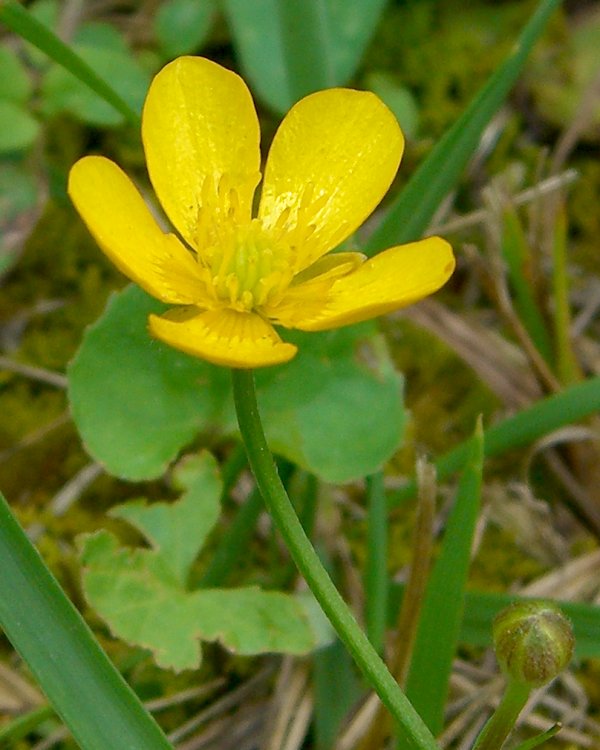
Creeping Buttercup (ranunculus Repens)
This plant often flourishes in over grazed pasture fields with poor stands of desirable forages.