
Meredith Talusan

- Meredith Talusan Child Star
- Meredith Talusan Pronouns
- Meredith Talusan Photos
- Meredith Talusan Images
- Fairest A Memoir
- Meredith Talusan (may 26)
- Meredith Talusan Wedding
The 20 Queer Qs series seeks to capture LGBTQ+ individuals (and allies) in a moment of authenticity as we get to know the subjects, what makes them who they are, what they value, and their thoughts and opinions on topics surrounding the LGBTQ+ community including thoughts on love, dating, media representation, identity, advice for LGBTQ+ youth, and more.
Meredith Talusan is the author of Fairest (Viking Press, 2020), a widely praised memoir which Kirkus Reviews called, “captivatingly eloquent.” It was excerpted in the New York Times, selected as a most anticipated book of 2020 by O: The Oprah Magazine, and is the People and In Style Magazine Pick for June. Born Marc Talusan in Talacsan village in San Rafael, Bulacan, Talusan was an albino, an anak araw in Filipino (poetically rendered here as “sun child”), but even as many of those around her treat her differently, her grandmother Nanay Coro doted on Marc, insisting that her albinism meant she would live in the United States someday and live a better life.
Intimate conversations have subjects talking about questions from their favorite drink to order and whether they prefer a night in or out to more in-depth questions like the ease or difficulty of making queer friends, discrimination and racism in dating, tackling stereotypes, and the people that inspire them.
The goal is to leave you, the reader, like you just gained a new friend, a new perspective, and that you learned something new about someone or saw a different side of someone, maybe one that you don’t see online, but one that’s maybe like you.
MEREDITH TALUSAN: A few years ago, when I was a staff writer at Buzzfeed, they did this criticism piece surveying trans memoirs, which required me to read a span of seven or eight books in two weeks. One of the things I noticed, to different degrees, was that they were telling their story like this: This is my experience and let me explain it.
Get to know Meredith Talusan, a fiercely intelligent Filipina-American writer and editor who encompasses an array of identities. Her work has been featured onThe Guardian, VICE, BuzzFeed, Wired, and more. Learn about her thoughts on love, what she finds sexy, advice for LGBTQ+ youth, her chosen family, and more.
Meredith Talusan
Age: Old enough to have spent two whole years as an adult without a cell phone
Preferred Pronouns: She/Her, They/Them
Sexually Identifies As: Bi Plus
1. What do you love about the LGBTQ+ community?
I love how it can both be really specific, there are situations in which being queer can be an experience that only you can have and situations where it’s an experience that you think can be shared by everyone. I love the specificity and expansiveness.
2. Talk about your first queer kiss?
Because I’ve moved through a lot of identity configurations and some of them were not – like what does it mean to be a binary trans woman that’s kissing a cis straight man for the first time. Is that queer? Maybe it is. So I grew up in a super catholic background in the Philippines, moved to the states at 15, was very much afraid of American culture, was socialized to believe that I shouldn’t date until college.
Then when I got to college, I started kissing people. There was this guy, his name was Stephen, I was gay male identified at the time. He went to BU and he went to the first queer dance at Harvard and then we went to a formal together at Harvard. He was tall, 6’2 and now in retrospect, kind of problematically if you were to use the word straight acting, that would’ve been a description of him. So then we came up to my room after that winter formal and we kissed and it was great.
It was this really odd sensation because I’d been exposed to gay culture, I was just coming out at that point and so there was this very weird, especially because he was this tall and prototypically athletic so there was this definite. In retrospect, I’ve had significantly more queer sexual dynamics since then and physical dynamics. But at the time, it really did feel like I was a girl, kissing a guy who happened to be attracted to me in my current state so it was definitely a genderqueer thing happening there. Then it turned out that he was really hot but also boring.
3. What’s a song you consider to be an LGBTQ+ anthem?
Whenever people talk about LGBTQ+ anthems, I find that people are referencing gay male anthems like “I’m Coming Out,” “I Will Survive,” etc. A song that is really meaningful to trans people is the song “Reflection” from Mulan which applies to both transmasculine and transfeminine people and it gets passed around, the meaning of reflection. It’s like this quiet anthem that needs to be bigger.
4. What’s advice you have for LGBTQ+ youth?
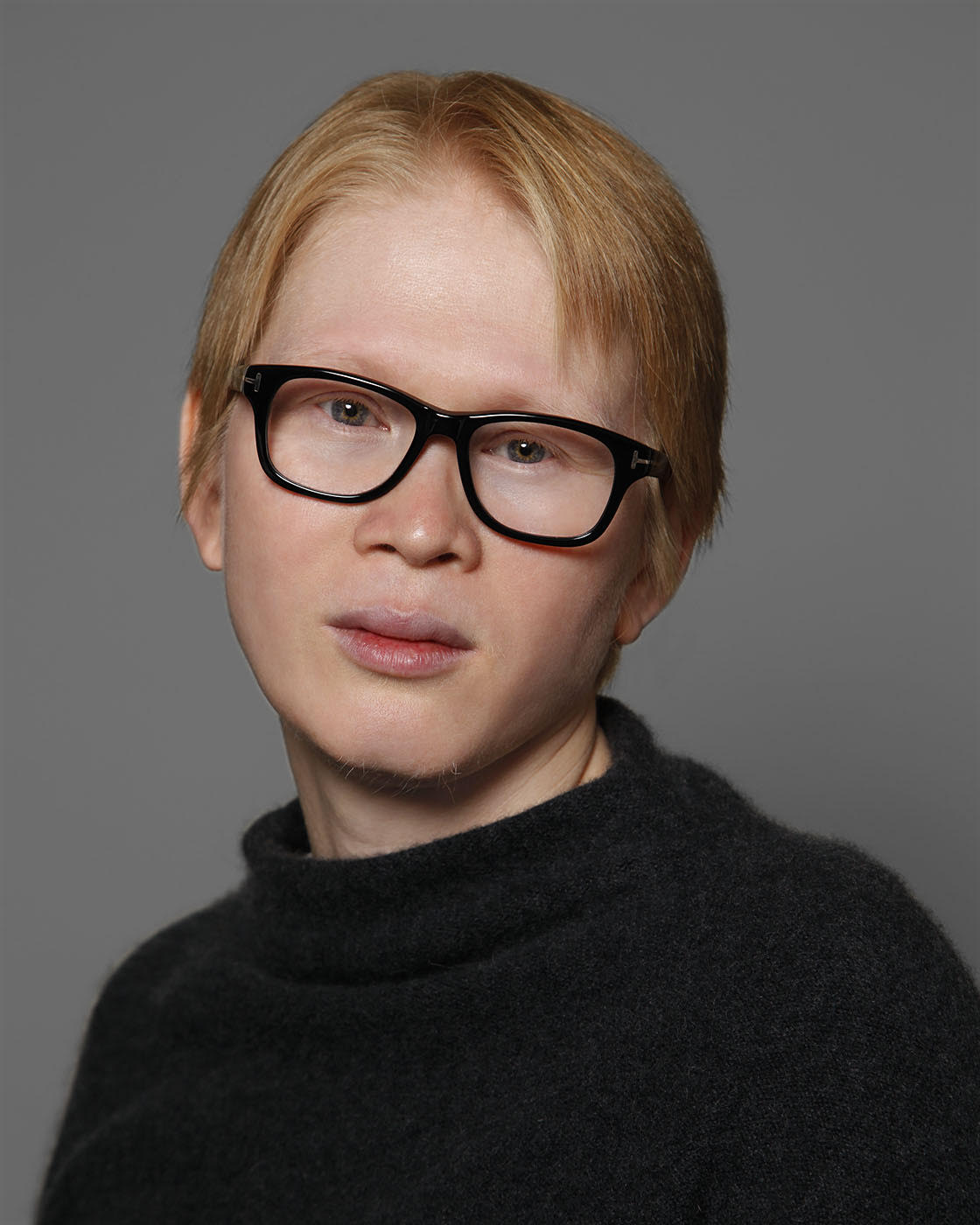
Advice I have for LGBTQ+ youth is to know your own power. Know your own knowledge, own your own knowledge. I feel like we’re living in a world right now where young people know just as much, if not more than older people and I find myself constantly learning from people who are younger than me, and growing because of the fact that I hope that I’m the kind of person that has the capacity to learn from people who are younger than them and I know there are older people who have a hard time doing that. For me, maybe that’s part of the reason editing a youth oriented queer publication is a really good fit for me because I just love new ideas, new ways of thinking of things, and new ways of framing something that I thought I knew. Those are all amazing things that young people have really strived and fought for. Own your own knowledge.
5. Do you believe in love?
I do, I’m a hopeless romantic. I believe in love, yet I believe in love both as a spiritual and cognitive experience and I think it’s possible to live between the two.
6. What values would you like in an ideal partner?
I don’t think there’s an ideal partner. I think there is an assumption in American culture that people are who they are and they partner with other people who are who they are, they come together and that’s not how partnership in a Filipino context works. In a Filipino context, the idea is that you expect your partner to change you just as you expect your partner to be changed and it’s your union that is the entity, it’s the two of you together. So for me, my current partner is kind, he’s incredibly supportive, ridiculously smart, and can put up and be patient with the fact that I spend my days making decisions and expecting other people to follow them and to my detriment, I bring that attitude home with me.
7. Fill in the Blank: Drag Queens are _______
Problematic Faves. I love them but there are times where I think they’re transmisogynists.
8. Describe what the LGBTQ+ community is to someone who knows nothing about it.
The LGBTQ+ community is like a big tea party where everyone is dressed in fancy costumes and is sipping different types of tea. But then there are just moments when everybody goes unexpectedly silent and everybody just looks at each other and is happy to be there.
9. Fill in the Blank: Love is _______
Complicated, but in the best way.
10. What hopes do you have for the LGBTQ+ community in the future?
I hope that the queer community can continue to be as vital, innovative, creative as it has been while at the same time incorporating as many people from varied intersectional backgrounds as it can and recognizing that a queer community led by white gay men is no longer an actual queer community.
11. Is there a LGBTQ+ TV show or movie that has had an impact on you?
Tongues Untied by Marlon Riggs. It’s an experimental queer film by a gay black man. Coming from a conservative part of California and coming to Harvard, the first class I ever took was “Topics in Gay Male Representation.” That was the first properly queer movie that I saw and it was the first time that I identified my queerness not just as a quality but as a creative possibility.
12. What’s your earliest memory that you felt you were different?
So I was raised by my grandmother because my parents had me when they were young and my grandmother (bless her heart) allowed me to suckle on her breast even though she didn’t have any milk and I have a strong memory of doing that and I was maybe a year old at most and noticing that my skin was white and her skin was dark but everyone else around me had dark skin. I think I was like, “Oh! I’m different in this important way.” I grew up in a rural part of the Philippines where I was the only albino kid so I think because of that experience, I was aware that people were paying attention to me and fawning over me and there were a lot of people all the time being attentive to me and when I put it together, I realized it’s because I look different than everyone else.
13. Have you found your chosen family?
I’m constantly finding my chosen family. The fact that I straddle so many communities, I have multiple groups and they overlap. But they are often also excessive because I used to be a gay man so I have really strong relationships with other gay men and really strong relationships with other trans women. As a bi plus queer woman, now I have strong relationships with other queer women and I also have relatively equal numbers of white friends and minority friends. With my minority friends, I have my asian crew and my diverse minority crew and a specific Filipino crew. My chosen families are multiple.
14. What is the title of the current chapter of your life?
Tranna Wintour
15. What is a quality you find sexy?
Self awareness
16. What are deal breakers for you when dating someone?
Emotionally, I don’t want to say deal breaker – but I would say insecurity can be hard. I try to be as tolerant of it especially when it expresses itself in people who have been historically marginalized because there’s a correlation there. But with people that I am closest to, I try to get to a place with them where I can support and nurture them such that they feel that those insecurities can somehow be mitigated or resolved through our relationship, because I’m an unusual marginalized minority that’s not particularly insecure because I don’t have that early childhood history of being marginalized for being different.
17. How much does your queer identity play into your overall identity?
It’s just one of many identities I occupy. Professionally I work in the queer arena, and also trans related issues have been at the forefront of national discussion. It’s relatively prominent, but I’m also a first generation immigrant, albino, and as a result, I’m also disabled. I’m an avid swimmer, I’ve trained in dance when I was a kid, I’m interested in photography, knitting and I’m a person that has so many interests and belong to so many communities, that I feel like being queer is simultaneously such a small part of that but informs everything I want to do.
18. Fill in the Blank: In 5 Years I Want To _________
I want to feel as if I’ve nurtured as many marginalized people as I can to reach their full potential as I myself have been nurtured by others.
19. Who is someone in your life who gets you?
Phillip Picardi gets me. He knows what pushes my buttons and knows how to get me to do things that I don’t think I’m interested in doing. I turned him down the first time he offered me this job and he figured out how to get me to say yes. Then as soon as I was here within the first week I was like, that was so dumb. If he hadn’t figured out how to frame the job to me in a way that would allow me to get over myself to say yes then I would not have this singular amazing opportunity.
20. What value has being a trans person given you?
If I had been born cis, I would’ve been absolutely insufferable if I was a cis woman. Because light skinned blonde people in the Philippines are treated – there’s so much colonial mentality in the Philippines so I would’ve been just ridiculously spoiled and nobody would be able to stand me except people who would want to sleep with me. I’ve gained creativity, insight, a perspective on the world that other people don’t have. I’ve gained a community and an entire set of relationships that I am deeply proud of and deeply grateful for.
Meredith is currently an Executive Editor forthem, Conde Nast’s first queer community platform. She is currently writing a memoir, Fairest, with Viking Books exploring race, gender, immigration and intersectionality. For updates, follow her on Facebook and Twitter!
Though I have never met Meredith Talusan in person, she seemed, one Tuesday in late April over Zoom, familiar to me, like we’d been in conversation already for a long time. Perhaps it’s because I’d just recently finished reading Fairest, her memoir. Perhaps it’s because Fairest is written with that kind of wrenching honesty and unflinching self-evaluation—often just embryonic or gestural in most other memoirs—that engenders a feeling of quiet intimacy with the writer. Perhaps it’s because her account of queer desire and trans longing felt adjacent to my own, as I am, like Talusan, a trans person who medically transitioned after graduating from Harvard. Her description of walking home, after a party, to her dorm down Mt. Auburn Street—wearing a dress in public for the first time—was a vertiginous aide-mémoire, returning me to the first time I wore boxers and a binder and a horrible pleather jacket, walking down Mt. Auburn Street, heading home by the same streets, a little more than a decade after Meredith did.
Fairest tracks transitions that aren’t visually perceptible, but are narratively indelible: transitioning from a boy to a nonbinary trans-feminine person; moving from a small village in the Philippines to Harvard; being mistakenly perceived as white because she is albino; unlearning overvaluations of whiteness and the desire to be perceived as white.
Over a quiet afternoon, we spoke about the tropes of trans memoir, recursive fantasy, the ethics of autobiographical representation, shame and narrative revision, and queer cruising.
INTERVIEWER
Your memoir felt radically different from any other trans memoir I’ve encountered. Why did you choose the Proust epigraph about being imprisoned in the wrong body, which is a longstanding trope of these memoirs?
TALUSAN
I was primarily interested in thinking about precedents, windows of existence around work that I’ve read before, with the understanding that different eras have had really different conceptions of gender. I was actually much more influenced, in certain ways, by James Baldwin, so I was looking for a Baldwin epigraph from Giovanni’s Room, but his work is even worse when it comes to portraying trans people. I felt that contextualizing the work of the present within the understanding of how people have seen gender in the past was important. Especially in Sodom and Gomorrah, how tortured that relationship to gender is, how during that period of time there was a much greater overlap in peoples’ conceptions of gender and sexuality. Where I come from, the Philippines, gender is contextualized in certain similar, though significantly less, phobic ways.
INTERVIEWER
As soon as I asked that question I thought, well, you’re also working with familiar language, there’s rhetorical continuity in your work with mid- and late-century American trans-feminine memoir. I’m thinking of books like Christine Jorgensen’s A PersonalAutobiography and Reneé Richards’s Second Serve, where language like “no longer a son,” or “the man I used to be” was used. I don’t see that anywhere now in contemporary memoir, other than in your book. What’s at stake for you in that move?
TALUSAN
Meredith Talusan Child Star
I have always been open about how my own trans experience was not one of assigned-gender denial. It dovetails into my specific cultural upbringing. I don’t perceive myself as never having been a boy, or never having been a man. But I recognize that the rhetoric of “born a man” or “used to be a man” has been deployed by people, by anti-trans people, for a really long time. And the idea of the gender “one is meant to be” since birth has been such a vital element of medical gatekeeping around trans health care. There are reasons why, politically, it’s been important for the trans community to adopt that language, and for people to believe that about themselves, whether consciously or unconsciously. One of my major goals writing the memoir—especially having spent a lot of time on political writing, writing op-eds about trans issues—was to situate it as me explaining myself to myself. Because so much trans memoir has been about explaining ourselves to cisgender audiences and justifying our existence. And I wasn’t interested in that. I wanted to give myself the opportunity to be able to understand and situate my experience during those periods of my life with the person I am now. So the reader is positioned not as a person that I’m explaining myself to, but as an observer in my self-exploration.
INTERVIEWER
Another trope I’m always fascinated by are mirror scenes. There’s a scene where you are at a Harvard reunion in 2017 and you’re looking at the mirror, and after a moment you say, “the mirror was just a mirror now.” And my first question was, when is that ever true? When is a mirror just a mirror? The mirror, not unlike the madeleine, allows you to explore narrative fantasy—by which I don’t mean fantasy narratives, but the fantasy of a kind of narrative. What kinds of narratives did the mirror help you to access, in a phantasmic sense?
TALUSAN
I am somebody who is consistently perceived, as I move through the world, as a person with a history that I don’t actually have. The mirror was a really good foil to describe that experience. I’m perceived as cisgender, which I’m not, native born, which I’m not, able-bodied, which I’m not, white, which I’m not. There’s a way in which the mirror is a vehicle through which I’m able to face those two realities—the realities of perception, and the reality … not even of truth, because the fact of the matter is perception creates its own truth. So whatever you want to call that … antiperception. I was brought, really unwillingly, into my white-passing identity and into an identity that’s not being perceived as Filipino, but often albino. I see mirrors everywhere. Whenever I see any person I often have to situate myself in relationship to them and the image that they’re projecting because I am so many people at once. I am both white and not white, cis and trans, a woman with a male past that she’s not disavowing, who now lives in a more indeterminately gendered space. I don’t know where nonbinary gender exists, but it’s not on one side or the other.
INTERVIEWER
I was struck by the scene in which you’re arriving at Harvard for the first time and you take a cab from Logan Airport. When the driver asks where you’re from, you describe a life that is not yours, but is your then fantasy—Santa Monica, a beach house, private school friends you’ll meet at Harvard, a white mom and dad—a fantasy that you describe yourself creating for the cab driver’s benefit as well as yours. Fairest deals a lot with regressions and declensions of fantasy, like what R.D. Laing does in Knots. I see you see my fantasy, I fantasize about your fantasization of me.
TALUSAN
There are a number of moments in the book where that happens. The one that I had the hardest time coming to terms with was the scene where I hire a Filipino sex worker to have sex with and then, in the middle, get lost in the fantasy of us both being Filipino boys together, then opening my eyes and realizing that the reality of my body would lead someone else to have a very different fantasy than the one I was having. Those moments were challenging to write, it was hard to be vulnerable enough to write that that is what I did. As a memoirist, to accept whatever you want to call them … mistakes in judgement, ways in which I’ve behaved that I wouldn’t behave now, I hope, if I were put in similar situations. But in some ways, it wasn’t particularly challenging to write about that regression of fantasy because it’s such an enormous part of my life. All of my close relatives, including my grandmother, whom I was closest to, informed me, from my earliest memories, that I was going to grow up to be a white American person. My life now is in many ways a living projection of their fantasies.
INTERVIEWER
In the book you write, “I would have probably been bakla, had I remained in the Philippines.” Bakla doesn’t have a precise complement in Western gender taxonomies, but as I understand it, in the Philippines, it’s a third gender, a category of folks who are assigned male at birth, but present as female. But bakla is not an identity you identify with in the book. It seems to me as well that you have an ambivalence about transness as an identity. I’m referring to the moment where you talk about Renée Richards and Christine Jorgensen as such a limited representation of transness that doesn’t feel homey to you. Could you say a bit about what it’s like to write about an identity that doesn’t have the same kind of intelligibility for an audience mostly of white American readers? I’m thinking as well of Akwaeke Emezi’s Freshwater, which focuses on an ogbanjie. Emezi has describedogbanje as “an Igbo spirit that’s born into a human body, a kind of malevolent trickster, whose goal is to torment the human mother by dying unexpectedly only to return in the next child and do it all over again.” Ogbanjie, rather than trans, more accurately frames the identity Emezi writes about. I was teaching Freshwater a few months ago, and all of my students were like, Cool this character’s trans. No … and yes.
TALUSAN
Meredith Talusan Pronouns
In part, the project of writing the book was to be able to situate it as a narrative that defies a lot of those Western categories. And a lot of people are doing that work, not just me. I’m thinking of Cyrus Dunham, in addition to Akwaeke Emezi, or the work of Alok Vaid-Menon. When I call myself trans and when I identify as trans in a Western context, the fact is that I am trans, and a person who experienced medical transition. But I did not experience an antagonistic relationship with my body in ways that a lot of people describe. Or I’ve moved to a category where I don’t feel comfortable identifying exclusively with a binary gender. Those challenges of categorization hopefully expand what trans means. Expanding how we conceive people’s transitions. Hopefully the book can offer a sort of understanding of how transness can take on this incredible array of forms. What’s really interesting is those limitations exist in the Philippines, too, but in different ways. In the Philippines, trans women who undergo surgery and are no longer discernible as third gender are, in certain ways, more marginalized and more oppressed than bakla, especially on the street, because they’re perceived to be deceptive in ways that bakla are not. Also, it’s still very challenging for trans women in the Philippines to be attracted to other women. The idea of a trans lesbian, for a Filipino constellation of gender and sexuality, is challenging.
INTERVIEWER
You came into your sexuality during the height of the AIDS crisis, and you write about walking down Eighth Avenue and seeing porn theaters. When so much of the book felt familiar to me, this moment felt rooted in a queer history I never experienced, remembering urban and public queer intimacies that once existed before the Disneyfication of Times Square. This is something Samuel Delany writes beautifully about, but something I rarely encounter from a trans perspective. Could you speak about this world of queer sexualities that has been lost?
TALUSAN
I do feel like, for me, the set of definitive texts around cruising in Times Square is Times Square Red Times Square Blue. I think it allowed me to situate my own fascination with whiteness during that period of my life as a fetish. I was culturally raised to believe in the superiority of European people, and so from that perspective, cruising culture was really important for me, having had sex with older men during that period and having had, in certain ways, a real form of queer mentorship that isn’t as prevalent in the heterosexual world. But it was also important for me to own up to the fact that I didn’t have sex with any people of color until after I transitioned. And I had opportunities to. Oh, yes! The fact that I just said I didn’t have sex with any people who were not white, and yet I had sex with that sex worker … that fault of memory indicates something about my consciousness, how in certain ways I viewed that experience as a manifestation of the person I would have become had I stayed in the Philippines rather than the person that I was.
INTERVIEWER
When you talk about this book do you say I, or the speaker, or the character? How do you refer to this figure?
TALUSAN
Something in between something else, which has no—a term that doesn’t exist. I want to be able to own those experiences and I want people understand that I experienced them, which is why the book is a memoir. Because it was written really novelistically, but I want the narrative to be evaluated as a personal narrative. You might disagree but I’m really antipathetic to Andrea Long Chu’s review method for Jill Soloway’s memoir, which evaluated the person’s actions rather than evaluating the way that the person was situated in the narrative of their actions. We’re not writing antipathetic reviews of Tess from Tess of the d’Urbervilles and her cluelessness, or Maggie Tulliver from Mill on the Floss and her fickleness. In the context of this narrative I was very careful to situate myself within the frame of mind that I was in during those moments, as I was experiencing them. Which necessarily means that in a lot of cases I feel differently about those experiences now and probably would have done something else today. So that’s part of why I resist both me as a character and me as a person, because I feel like I’m in between. And also, while I’ve already dug myself into a hole by mentioning the Chu review, I also really deeply object to this notion that a memoir’s flaw is the author telling on themselves. Because the memoirist’s entire job is to expose inconvenient, difficult, tortured truths about themselves—otherwise one would just be left with a simple narrative in which the memoirist emerges as a character of virtue, and what does the reader get from that?
INTERVIEWER
Meredith Talusan Photos
How did you come up with the title? As you say in the book, there is “no such thing as a single fairest life.”
Meredith Talusan Images
TALUSAN
I am one of those people who needs a title in order to understand a piece of writing. I think I understood that the title had to coalesce as many of the elements of the book as possible, and I knew that it would be equally about being trans and about race. That was very important to me, even though I felt a lot of ambient pressure like, Oh, there’s a lot of interest in trans stuff, just make it a trans memoir. I think that was how the idea of Fairest came to be. Oh, yes, there is this term in our culture that equates feminine beauty with whiteness and then, in the aftermath, realizing it is also about justice, about fairness, both in the interpersonal sense and in the broader sense.
INTERVIEWER
I know that I’m the first trans interviewer to interview you about this book. Is there a question that you want a trans interviewer to ask you?
TALUSAN
Fairest A Memoir
Maybe I’d want you to ask me how I hope the book will affect trans people. Maybe I want you to ask me that.
INTERVIEWER
Meredith Talusan (may 26)
I do want to know how you think it will affect trans people. I also want to know what you hope trans people will do with it.
TALUSAN
I’ve long perceived myself as not being quite of my time. I transitioned in 2002. I was transitioning in an environment where it was assumed that if you could be perceived as cis, you would go into stealth after you transitioned. I’m really curious about what young people, younger people, significantly younger—people who are post-transition and twenty years younger than me—how they would perceive this, because it’s not necessarily a projection of their life, it’s more of a projection of their life from a past generation. In terms of what people do with it, the thing that I find difficult to articulate, and is very difficult to articulate in general, in an American environment with such a strong ideology of individualism, is the simultaneous fact that one should be able to respect any person’s self-conception while at the same time all of us need to be a lot more cognizant of the ways in which our environment shapes us. Which is something that I feel viscerally as somebody who comes from two very different cultural worlds. What’s really interesting about being a writer is you get to spend time thinking to yourself, this is the story of my life, this is the story of how this happened. Then, you need to ask, is this how I really felt, is this how I really and truly conceive of myself? Whenever I’m writing a scene, the first way I usually write it is the way that corresponds to existing tropes of how such scenes are written. Its only in excavating the specific memories of what actually happened and the interaction between those factual elements of the story and the constellation of feelings that I’m having that I come to a more specific truth. And I feel like—I don’t know if concerned is the right word, but I’m going to go out on a limb and say I believe that a lot of trans people … well, no, I can’t believe that because I don’t know thousands and thousands of trans people. I can only say that I can imagine, given that I had to write a whole book in order to figure out really specific aspects of my identity, I could imagine there are trans people out there who rely on existing tropes to describe their identities and experiences, when, upon self-examination, those tropes don’t actually hold up. Their conceptions of themselves are more specific, idiosyncratic, and perhaps unique, than they themselves allow for at this moment.
Meredith Talusan Wedding
RL Goldberg is a Ph.D. candidate in English and humanistic studies at Princeton.